A kitchen meat thermometer is an essential tool that ensures food safety and culinary precision by accurately measuring the internal temperature of meat, eliminating guesswork. For over 15 years, as a dedicated culinary professional and content creator for JXSRW.com, I’ve observed how this simple device transforms home cooking, guaranteeing success in achieving perfect doneness for various meats.
Why Every Kitchen Absolutely Needs a Meat Thermometer
We’ve all experienced the uncertainty of cooking, wondering if a dish is truly ready. Relying on visual cues like color or firmness is unreliable, often leading to undercooked, unsafe food or overcooked, dry results. A kitchen meat thermometer eliminates this guesswork, providing the confidence to cook safely and deliciously every time. It’s not just a tool; it’s your peace of mind on a plate. For shop curated meat thermometers on this site.
Decoding the Types: Which Kitchen Meat Thermometer is Right for You?
The world of meat thermometers is diverse, with each type offering unique advantages for different cooking styles. Understanding these differences is key to choosing your perfect kitchen companion.
Instant-Read Thermometers: Your Quick Check for Doneness
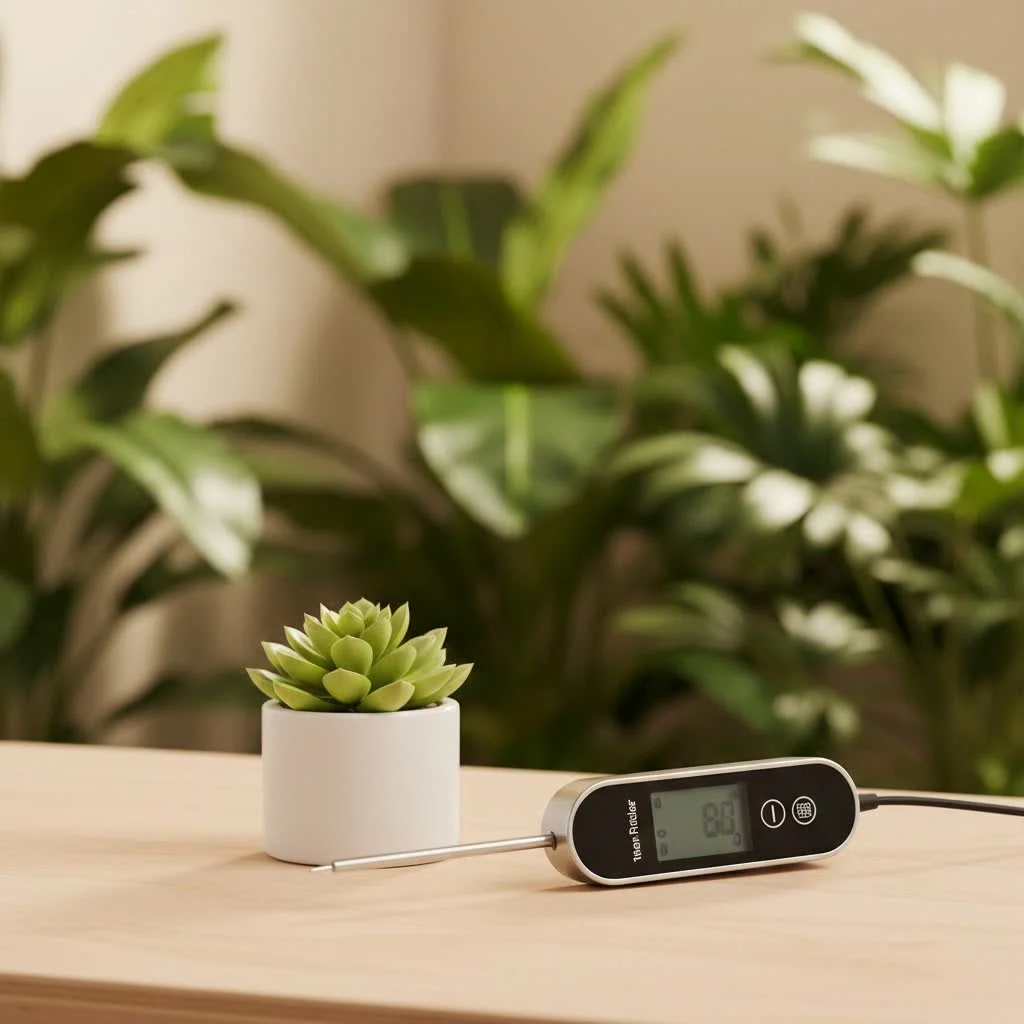
Instant-read thermometers are ideal when speed is essential. These digital devices feature a sharp probe that you insert into the thickest part of your meat for a few seconds to get a rapid temperature reading. They are excellent for grilling burgers, pan-searing steaks, or checking individual chicken pieces. They provide a snapshot of the internal temperature and should not be left in the oven or on the grill during cooking. Their slim profile also makes them easy to store.
Digital Probe Thermometers: The Set-It-and-Forget-It Solution
For larger cuts of meat like roasts, whole chickens, or briskets that require longer cooking times, digital probe thermometers are invaluable. These models feature a heat-resistant probe that stays inserted in the meat throughout cooking. The probe connects by a wire to an external unit, often with a digital display, which you keep outside the oven or grill. Many include programmable alarms that alert you when your target temperature is reached, allowing you to monitor progress without constantly opening the oven door. Some advanced models offer wireless connectivity via Bluetooth or Wi-Fi, letting you track temperatures from a smartphone app.
Oven-Safe Thermometers: Constant Monitoring for Roasts
Also known as bimetallic coil thermometers, these are designed to remain in your roast for the entire cooking duration. They typically have a large dial that is easy to read through an oven window. While convenient for continuous monitoring, they are generally not as fast or precise as digital options and are best suited for thicker cuts where the probe can be inserted at least 2 to 3 inches deep.
Infrared Thermometers: A Niche Player for Surface Temps
|
Our Picks for the Best Meat Thermometer in 2026
As an Amazon Associate I earn from qualifying purchases.
|
||
| Num | Product | Action |
|---|---|---|
| 1 | Meat Thermometer Digital for Grilling and Cooking - ANDAXIN Waterproof Ultra-Fast Instant Read Food thermometers with Backlight & Calibration for Kitchen, Deep Fry, BBQ, Grill(Red/Black), LCD |

|
| 2 | ThermoMaven Professional Meat Thermometer Digital, Ultra-Fast 0.5 Sec Instant Read, NIST Certified ±0.5°F Accuracy, 100% Waterproof, Auto-Rotating Backlit Display, Lift-to-Wake, for BBQ/Cooking/Candy |
|
| 3 | Alpha Grillers Meat Thermometer Digital - Instant Read Food Thermometer for Cooking and Grilling Gifts for Men Valentines Day Gifts for Him Her Mom Dad |
|
| 4 | TRAUSI Instant Read Meat Thermometer, Fast & Accurate Digital Food Thermometer with Backlight, Waterproof & Magnet for Grilling, Cooking, BBQ, Smoker, Baking, and Candy Making Blue |
|
| 5 | Meat Thermometer Digital,IP67 Waterproof Thermometer for Cooking with 180° Auto-Rotating LED Display,Fast Instant Read Food thermometers for Grilling, Oven,Candy,Liquids,Beef,BBQ(Black) |
|
| 6 | Professional 0.5 Sec Instant Read Meat Thermometer Digital, NIST Certified ±0.5℉ Accuracy, Auto Rotate Large LCD Display, Highly Waterproof Cooking Thermometer for Baking Grill BBQ Smoker Oven, Red |
|
| 7 | 0.5s Instant Read Digital Meat Thermometer, Paysean ±0.5℉ with Auto-Rotating Backlit Display, IP67 Waterproof and Calibration for Cooking, Candy, Grilling, BBQ, Liquid, Smoker, Beef |
|
| 8 | 0.5 Sec Instant Read Meat Thermometer Digital with ±0.5℉ Precision, Food Thermometer for Cooking Kitchen Gadgets, Oven Grill Candy BBQ Essentials Accessories, Gifts for Him Dad Men Birthday, Red |
|
| 9 | Digital Meat Thermometer, Waterproof Instant Read Food Thermometer for Cooking and Grilling, Kitchen Gadgets, Accessories with Backlight & Calibration for Candy, BBQ Grill, Liquids, Beef, Turkey… |
|
| 10 | Meat Thermometer Digital, Instant Read Meat ThermometerI for Grill and Cooking, Waterproof Food Thermometer for Kitchen and Outside, BBQ, Turkey, Candy, Liquids, Beef |
|
Infrared thermometers (often called “laser thermometers” or “temperature guns”) measure surface temperature rather than internal temperature. They are useful for checking the temperature of a skillet, grill grates, or dough, but they are not suitable for determining the doneness of meat. Perfectly cooked meat requires knowing the internal temperature, not just the outside.
Mastering Your Kitchen Meat Thermometer: A Step-by-Step Guide
Using your kitchen meat thermometer effectively is simpler than you might think, but precision is paramount.
Where to Place the Probe for Accurate Readings
The golden rule for any meat thermometer is to insert the probe into the thickest part of the meat, avoiding bones, fat, or gristle. These elements conduct heat differently and can give an inaccurate reading. For thinner cuts like burger patties or chicken cutlets, insert the probe horizontally from the side to ensure the tip reaches the true center.
How to Use Your Kitchen Meat Thermometer for Poultry
For whole poultry, insert the thermometer into the inner thigh, ensuring the tip doesn’t touch the bone. For individual pieces like breasts or thighs, aim for the thickest part of the meat. Poultry must reach a safe internal temperature of 165°F (73.9°C) for safe consumption. It is recommended to check multiple spots on larger birds to ensure even cooking and safety.
Perfecting Beef and Lamb with Your Kitchen Meat Thermometer
Achieving your desired doneness for beef and lamb is where a meat thermometer truly shines. Insert the probe into the thickest part of steaks, chops, or roasts.
- Rare: 125-130°F (52-54°C)
- Medium-Rare: 130-135°F (54-57°C)
- Medium: 135-140°F (57-60°C)
- Medium-Well: 140-150°F (60-66°C)
- Well-Done: 150-160°F (66-71°C)to factor in “carryover cooking”—the phenomenon where meat’s internal temperature continues to rise a few degrees after it’s removed from the heat. Pull beef or lamb about 5-10 degrees before the target temperature, letting it rest for 3-5 minutes to reach perfection and allow juices to redistribute.
Pork, Veal, and Ground Meats: Getting It Right
Pork and veal roasts, chops, and steaks should reach a minimum internal temperature of 145°F (62.8°C) with a 3-minute rest time. Ground meats, including ground beef, pork, veal, and lamb, must be cooked to 160°F (71.1°C) to ensure safety. For ground poultry, aim for 165°F (73.9°C). Insert your thermometer into the thickest part of meatloaf or sideways into burger patties for the most accurate reading.
Understanding Safe Internal Temperatures: Your Food Safety Blueprint
Knowing the USDA-recommended safe minimum internal temperatures is non-negotiable for preventing foodborne illness. Here’s a quick reference:
| Food Type | Minimum Internal Temperature | Rest Time (if applicable) |
|---|---|---|
| Beef, Pork, Veal & Lamb (Steaks, Chops, Roasts) | 145°F (63°C) | 3 minutes |
| Ground Meats (Beef, Pork, Veal, Lamb) | 160°F (71°C) | None |
| All Poultry (Whole, Parts, Ground) | 165°F (74°C) | None |
| Fresh or Smoked Ham (Uncooked) | 145°F (63°C) | 3 minutes |
| Fully Cooked Ham (to reheat) | 140°F (60°C) (USDA-inspected); 165°F (74°C) (others) | None |
| Fish & Shellfish | 145°F (63°C) | None |
| Casseroles, Egg Dishes | 165°F (74°C) | None |
“A reliable kitchen meat thermometer is the single most important tool for both culinary excellence and food safety,” advises Chef Julian Thorne, a renowned culinary instructor. “It empowers home cooks to achieve restaurant-quality results with confidence.”
What Affects Your Kitchen Meat Thermometer’s Accuracy?
Even the best kitchen meat thermometer can give misleading readings if certain factors aren’t considered.
- Improper Placement: Hitting a bone, fat, or gristle can skew your reading. Always aim for the center of the thickest muscle.
- Lack of Calibration: Thermometers can drift over time. Regular calibration ensures they are reading correctly.
- Not Stabilizing: Rushing a reading before the thermometer stabilizes will give a false number. Allow a few seconds for it to settle, especially with instant-read models.
- Food Residue: Bits of food or grease on the probe can act as insulation, affecting how quickly and accurately the sensor picks up the meat’s temperature. Keep it clean!
- Ambient Temperature: For probe thermometers, ensuring the external unit is away from direct heat sources (like oven vents) can prevent false ambient readings.
Keeping Your Kitchen Meat Thermometer in Top Shape: Care and Storage
A little care goes a long way in ensuring your kitchen meat thermometer serves you well for years.
Cleaning Your Thermometer
Immediately after each use, clean the probe with hot, soapy water. For digital models, be careful not to immerse the entire unit, as this can damage electronic components. Many probes can be wiped with an antibacterial wipe or briefly sterilized in boiling water (check manufacturer instructions first). For stubborn stains or built-up grease, a gentle scrub with a soft brush can help. Thoroughly rinse and dry before storing.
Calibrating for Precision
To ensure your thermometer is always accurate, calibrate it periodically using the ice bath method:
- Fill a large glass with crushed ice and add cold water. Stir well.
- Insert your thermometer probe at least 2 inches into the mixture, ensuring it doesn’t touch the sides or bottom of the glass.
- Wait 30 seconds (or 1-2 minutes for dial thermometers). The reading should be 32°F (0°C).
- If it’s off, some dial thermometers have a calibration nut you can adjust with pliers. For digital thermometers without a calibration feature, you’ll need to the offset or consider replacing it if it’s significantly off.
Proper Storage
Store your thermometer in a clean, dry place. Many instant-read thermometers come with a protective sheath for the probe, which helps keep it clean and prevents damage. If you have a delicate glass thermometer, keep it in its original packaging or a designated spot where it won’t be knocked around.
Common Hiccups and How to Fix Them
Even seasoned cooks encounter issues. Here are a few common problems with kitchen meat thermometers and how to troubleshoot them:
- Inconsistent Readings:
- Fix: Re-check probe placement (thickest part, away from bone/fat). Calibrate your thermometer. Ensure the reading has stabilized.
- Thermometer Not Turning On/Displaying:
- Fix: Check or replace batteries. Ensure the probe is fully inserted into the main unit if it’s a detachable model.
- Slow Readings:
- Fix: If it’s an instant-read, it should be fast. If consistently slow, it might be a lower-quality model or nearing the end of its life. Ensure the probe is clean.
- Wireless Connectivity Issues:
- Fix: Check battery levels on both the probe and receiver. Ensure you’re within the specified range and there are no significant obstructions (thick walls, large metal objects).
Frequently Asked Questions About Kitchen Meat Thermometers
Q: Can I leave an instant-read thermometer in the oven or grill?
A: No, instant-read thermometers are not designed to withstand prolonged high heat and can be damaged if left in an oven or grill. They are meant for quick spot checks. Use a digital probe or oven-safe thermometer for continuous monitoring.
Q: How often should I calibrate my meat thermometer?
A: It’s a good practice to calibrate your kitchen meat thermometer at least once a month, or whenever you suspect an inaccurate reading. It’s especially important after any accidental drops or impacts.
Q: Why does my meat thermometer read differently in different parts of the meat?
A: Meat cooks unevenly, especially larger cuts. Different areas will naturally have varying temperatures. Always take readings from the thickest part, and for larger roasts, check a couple of spots to ensure it’s fully cooked.
Q: Can I use my meat thermometer for other foods, like bread or candy?
A: Absolutely! Many kitchen meat thermometers, especially digital probe and instant-read types, are versatile. They can be used to check the internal temperature of baked bread, monitor oil for deep frying, or even ensure sugar syrup reaches the correct stage for candy making. Just be mindful of temperature ranges and cleaning.
Q: My meat looks done, but the thermometer says it’s not. What should I trust?
A: Always trust your kitchen meat thermometer over visual cues. The color and appearance of meat can be misleading, and only an accurate internal temperature can confirm doneness and safety. This is particularly true for poultry and ground meats.
Embrace the Precision, improve your Cooking
A kitchen meat thermometer isn’t just another gadget; it’s an indispensable tool that empowers you to cook with confidence, safety, and unparalleled precision. From preventing foodborne illness to achieving that coveted perfect doneness every single time, it’s a major upgrade. So, if you’re ready to banish guesswork from your kitchen and unlock a world of consistently delicious meals, invest in a quality meat thermometer, learn its nuances, and watch your culinary skills soar. Share your success stories with us at JXSRW.com – we love hearing how you’re transforming your cooking!
Frequently Asked Questions
Can an instant-read thermometer be left in the oven or grill while cooking?
No, instant-read thermometers are not designed for continuous exposure to high heat and can be damaged if left in an oven or grill. They are specifically made for quick spot checks of internal temperature. For continuous monitoring, it is best to use a digital probe or oven-safe thermometer.
How frequently should I calibrate my meat thermometer for accuracy?
It is recommended to calibrate your kitchen meat thermometer at least once a month to ensure its accuracy. Calibration is especially important after any accidental drops or impacts, or if you suspect the readings are inaccurate. The ice bath method is a simple way to check and adjust calibration.
Why do different parts of the meat show varying temperature readings?
Meat often cooks unevenly, particularly larger cuts, leading to natural temperature variations in different areas. Always take readings from the thickest part of the meat, and for large roasts, check a couple of spots to confirm it is thoroughly cooked and safe. Avoid bones, fat, and gristle for the most accurate reading.
Is it safe to use a meat thermometer for other types of food besides meat?
Yes, many kitchen meat thermometers, especially digital probe and instant-read models, are highly versatile. They can be used to check the internal temperature of baked bread, monitor oil for deep frying, or ensure sugar syrup reaches the correct stage for candy making. Always be mindful of the thermometer's temperature range and clean it thoroughly after each use.
If meat looks done but the thermometer reads otherwise, which should I trust?
Always trust your kitchen meat thermometer over visual cues like color or appearance. The visual characteristics of meat can be misleading, and only an accurate internal temperature reading can confirm that the meat has reached a safe doneness level, preventing foodborne illness. This is particularly crucial for poultry and ground meats, which must reach specific temperatures like 165u00b0F (73.9u00b0C) for poultry.
Mastering Your Kitchen Meat Thermometer
Learn how to effectively use, clean, and calibrate your kitchen meat thermometer for precise cooking and food safety.
Insert the thermometer probe into the thickest part of the meat, ensuring it avoids bones, fat, or gristle, which can skew readings. For thinner cuts, insert horizontally from the side to reach the true center. Proper placement is crucial for accurate temperature measurement.
Familiarize yourself with USDA-recommended safe minimum internal temperatures for different meats. For example, poultry must reach 165u00b0F (73.9u00b0C), while ground meats require 160u00b0F (71.1u00b0C). This knowledge is essential for preventing foodborne illness and ensuring safety.
Immediately after each use, clean the probe with hot, soapy water. For digital models, avoid immersing the entire unit to prevent damage to electronic components. Thoroughly rinse and dry the thermometer before storing it to maintain hygiene and functionality.
Calibrate your thermometer regularly using the ice bath method to ensure accuracy. Fill a glass with crushed ice and cold water, then insert the probe; it should read 32u00b0F (0u00b0C). This helps maintain precision and reliable temperature readings over time.
Store your thermometer in a clean, dry place, ideally with a protective sheath for the probe if available. Proper storage prevents damage and keeps the thermometer ready for its next use. This extends the lifespan of your device.
Cooking gear we tested in our own kitchens
Practical specs, not advice. Unsubscribe anytime.
I bought a cheaper dial thermometer after reading about them here. It works okay for roasts, but it’s a bit slow to read the temperature, and the dial fogs up sometimes when I’m cooking something steamy. Next time, I’ll probably invest in a more expensive digital model for better accuracy and speed. It’s still better than nothing, though.
As someone who loves to bake and cook, I’m always looking for ways to improve my kitchen skills. This guide was super helpful in explaining why visual cues aren’t enough. I finally bought a good quality probe thermometer, and my pork tenderloin has never been juicier. It really does take the guesswork out of cooking.
I’ve been grilling for years, and while I thought I had a good feel for doneness, this post made me realize I was still guessing sometimes. I picked up one of the wireless thermometers mentioned for my smoker, and it’s fantastic for those long cooks. I can monitor the temp from inside without constantly opening the lid. Wish I’d gotten one sooner.
I used to always overcook my chicken breasts because I was so worried about undercooking them. This guide really helped me understand the different types of thermometers. I ended up getting a digital instant-read one, and it’s been a game changer. No more dry chicken, and I feel so much more confident about food safety.