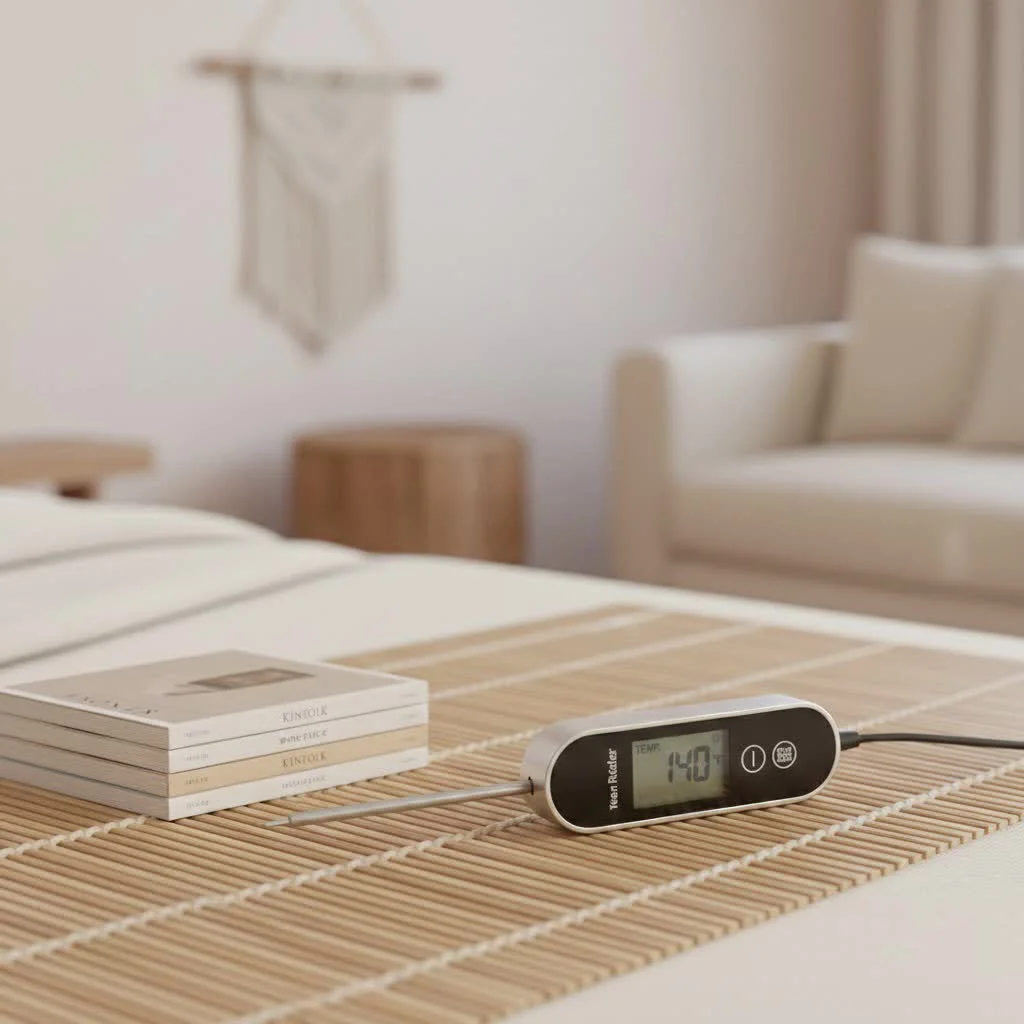
A meat thermometer for grilling is an indispensable tool that ensures food safety and perfect doneness for every cut of meat, from delicate fish to robust pork shoulder. It eliminates guesswork by providing precise internal temperature readings, which is crucial for preventing foodborne illnesses and achieving desired tenderness. The U.S. Department of Agriculture (USDA) provides specific guidelines for safe internal temperatures, making a reliable meat thermometer essential for consistent, delicious, and safe grilling.
Why a Meat Thermometer is Your Grilling MVP
Before we dive into the nitty-gritty, let’s talk about why this simple device is so crucial. It’s about more than just avoiding an undercooked meal; it’s about culinary confidence and, most importantly, food safety. For complete meat thermometers library on this site.
Ensuring Food Safety
Undercooked meat can harbor harmful bacteria like Salmonella or E. coli, leading to unpleasant foodborne illnesses. Visual cues such as color or texture can be incredibly misleading. For instance, a hamburger might appear brown even before it reaches a safe internal temperature. The U.S. Department of Agriculture (USDA) provides specific guidelines for safe internal temperatures precisely to eliminate these risks. A meat thermometer takes the guesswork out, giving you the certainty that your food is safe for everyone at the table.
Achieving Perfect Doneness
Beyond safety, a meat thermometer is your secret weapon for achieving your desired level of doneness. Whether you crave a rare steak with a cool red center, a perfectly medium-rare lamb chop, or fully cooked, tender chicken, precision is paramount. Pulling your meat off the grill at just the right moment prevents it from becoming dry, tough, or overcooked, locking in those precious juices and flavors.
Consistency, Every Time
Imagine replicating that incredible grilled chicken you made last summer, or nailing your famous brisket every holiday. A meat thermometer ensures consistency. Once you know the exact temperature that yields your preferred results, you can reproduce that perfection repeatedly, regardless of external factors like grill temperature fluctuations or different cuts of meat.
Different Types of Meat Thermometers for Grilling
The world of meat thermometers is more diverse than you might think, each type designed for specific grilling scenarios. Understanding their strengths will help you choose the best meat thermometer for grilling for your needs.
Instant-Read Thermometers
These are the quick-draw artists of the thermometer world.What are they? Instant-read thermometers typically feature a thin probe attached to a digital display (though some analog versions exist). They are designed to give you a temperature reading in just a few seconds.When to use them: They are perfect for spot-checking the temperature of thinner cuts like steaks, burgers, chicken breasts, or fish fillets. You insert the probe, get a reading, and remove it. They are not meant to be left in the meat during the entire cooking process.Expert Insight: “For quick checks on individual pieces, an instant-read like the ThermoWorks Thermapen One is unmatched,” says Chef Anya Sharma, a seasoned grilling enthusiast. “Its speed ensures minimal heat loss from your grill, which is vital for maintaining consistent cooking temperatures.”
Leave-In Probe Thermometers (Wired and Wireless)
|
Our Picks for the Best Meat Thermometer in 2026
As an Amazon Associate I earn from qualifying purchases.
|
||
| Num | Product | Action |
|---|---|---|
| 1 | TRAUSI Instant Read Meat Thermometer, Fast & Accurate Digital Food Thermometer with Backlight, Waterproof & Magnet for Grilling, Cooking, BBQ, Smoker, Baking, and Candy Making Blue |

|
| 2 | Meat Thermometer Digital,IP67 Waterproof Thermometer for Cooking with 180° Auto-Rotating LED Display,Fast Instant Read Food thermometers for Grilling, Oven,Candy,Liquids,Beef,BBQ(Black) |
|
| 3 | Digital Meat Thermometer, Waterproof Instant Read Food Thermometer for Cooking and Grilling, Kitchen Gadgets, Accessories with Backlight & Calibration for Candy, BBQ Grill, Liquids, Beef, Turkey… |
|
| 4 | ThermoMaven Professional Meat Thermometer Digital, Ultra-Fast 0.5 Sec Instant Read, NIST Certified ±0.5°F Accuracy, 100% Waterproof, Auto-Rotating Backlit Display, Lift-to-Wake, for BBQ/Cooking/Candy |
|
| 5 | Professional 0.5 Sec Instant Read Meat Thermometer Digital, NIST Certified ±0.5℉ Accuracy, Auto Rotate Large LCD Display, Highly Waterproof Cooking Thermometer for Baking Grill BBQ Smoker Oven, Red |
|
| 6 | Meat Thermometer Digital for Grilling and Cooking - ANDAXIN Waterproof Ultra-Fast Instant Read Food thermometers with Backlight & Calibration for Kitchen, Deep Fry, BBQ, Grill(Red/Black), LCD |
|
| 7 | Meat Thermometer Digital, Instant Read Meat ThermometerI for Grill and Cooking, Waterproof Food Thermometer for Kitchen and Outside, BBQ, Turkey, Candy, Liquids, Beef |
|
| 8 | Alpha Grillers Meat Thermometer Digital - Instant Read Food Thermometer for Cooking and Grilling Gifts for Men Valentines Day Gifts for Him Her Mom Dad |
|
| 9 | 0.5 Sec Instant Read Meat Thermometer Digital with ±0.5℉ Precision, Food Thermometer for Cooking Kitchen Gadgets, Oven Grill Candy BBQ Essentials Accessories, Gifts for Him Dad Men Birthday, Red |
|
| 10 | 0.5s Instant Read Digital Meat Thermometer, Paysean ±0.5℉ with Auto-Rotating Backlit Display, IP67 Waterproof and Calibration for Cooking, Candy, Grilling, BBQ, Liquid, Smoker, Beef |
|
For those longer, slower cooks, a leave-in thermometer is your best friend.What are they? These thermometers have a heat-resistant probe that remains in the meat throughout the cooking process. The probe is connected either by a wire to a display unit outside the grill or wirelessly to a base unit or a smartphone app.When to use them: Ideal for larger roasts, briskets, pork butts, or anything cooked indirectly for an extended period. Wireless models, like the Meater Pro, offer the convenience of monitoring temperatures from your phone, allowing you to mingle with guests or attend to other tasks without hovering over the grill. Many come with multiple probes, letting you track different cuts or even the ambient temperature inside your grill or smoker.Why they’re great for grilling: They eliminate the need to constantly open the grill lid, which helps maintain steady temperatures and prevents precious heat and smoke from escaping.
Infrared Thermometers
While not for internal meat temperature, these have a place in your grilling toolkit.What are they? Infrared thermometers measure surface temperatures using a laser.When to use them: They are excellent for checking the temperature of your grill grates or identifying hot and cold spots across your cooking surface, ensuring even cooking.Important Note: an infrared thermometer only reads the surface temperature; it cannot tell you the internal doneness of your meat.
Mastering the Art of Using Your Meat Thermometer for Grilling
Having the right tool is only half the battle; knowing how to use it correctly is where the magic happens.
Proper Probe Placement is Key
This is arguably the most critical aspect of getting an accurate reading.
- Thickest Part: Always insert the probe into the thickest part of the meat. This is typically the area that cooks slowest.
- Avoid Bone, Fat, and Gristle: Bones, large pockets of fat, or gristle can skew your reading, making it seem like your meat is hotter or colder than it actually is.
- For Thinner Cuts: When grilling steaks, chicken breasts, or burgers, insert the probe horizontally from the side into the center of the thickest part.
- For Whole Poultry: For a whole chicken or turkey, aim for the innermost part of the thigh, away from the bone, and the thickest part of the breast.
- The “Pull Back” Method: When using an instant-read thermometer, insert the probe a little past the center, then slowly pull it back. The lowest temperature you see is your most accurate reading, indicating the coolest part of the meat.
Timing Your Temperature Checks
When to check depends on the type of thermometer you’re using.
- Instant-Read: Start checking about 5-10 minutes before you anticipate the meat being done. Checking too early means unnecessary heat loss.
- Leave-In: These are designed for continuous monitoring. Set your target temperature alarms and let the thermometer do the work, only checking the display unit or app.
- Allow Stabilization: Give your thermometer a few seconds to stabilize its reading, especially digital ones, to ensure accuracy.
Understanding Carryover Cooking
This is a major upgrade for juicy results.What is it? Meat continues to cook for several minutes after it’s removed from the heat source due to residual heat. This phenomenon is called “carryover cooking.”How to use it: To achieve your desired doneness without overcooking, remove your meat from the grill when it’s about 5-10°F below your target internal temperature. Then, let it rest, loosely tented with foil, for 5-15 minutes (depending on size). This resting period allows the juices to redistribute, resulting in a more tender and flavorful final product, and the internal temperature will continue to rise to your target.
Safe Internal Temperatures for Grilling (USDA Guidelines)
Here’s a quick reference chart for safe minimum internal temperatures, according to the USDA. these are minimums; you can cook to higher temperatures for personal preference.
| Meat Type | Minimum Internal Temperature | Rest Time |
|---|---|---|
| Whole Cuts of Beef, Pork, Veal, Lamb (Steaks, Chops, Roasts) | 145°F (63°C) | 3 minutes |
| Ground Meats (Beef, Pork, Lamb, Veal) | 160°F (71°C) | None |
| All Poultry (Whole or Ground) | 165°F (74°C) | None |
| Fish | 145°F (63°C) | None |
Important Reminder: The “danger zone” for bacterial growth is between 40°F (4°C) and 140°F (60°C). Keep food out of this range for extended periods.
Keeping Your Thermometer Accurate: Calibration and Care
Even the best meat thermometer for grilling can lose its precision over time. Regular calibration and proper care are essential.
Why Calibration Matters
Think of calibration as fine-tuning your instrument. The frequent shifts from cold to extreme heat (a typical day in the life of a grilling thermometer) can cause its readings to drift. An uncalibrated thermometer can lead to unsafe food or disappointing overcooked meals.
How to Calibrate Your Thermometer
You can easily check your thermometer’s accuracy with two simple kitchen tests:
- The Ice Bath Method (32°F / 0°C):
- Fill a tall glass with ice, then add cold water until it’s full. Stir for 30 seconds to ensure a stable 32°F (0°C).
- Insert your thermometer probe into the center of the ice bath, making sure it doesn’t touch the sides or bottom.
- Wait for the reading to stabilize (about 30 seconds for digital, 1-2 minutes for dial). It should read 32°F (0°C).
- The Boiling Water Method (212°F / 100°C):
- Bring a pot of distilled water to a rolling boil.
- Carefully insert your thermometer probe into the boiling water, ensuring it’s submerged but not touching the pot’s sides or bottom.
- Wait for the reading to stabilize (about 30 seconds to 1 minute). It should read 212°F (100°C) at sea level. Note: Boiling points decrease at higher altitudes, so a quick online search for your local boiling point might be necessary.
Adjusting Your Thermometer:
- Dial Thermometers: If your dial thermometer is off, look for a small nut on the back of the display. Use pliers to gently twist it until the needle points to the correct temperature (32°F in ice water or 212°F in boiling water).
- Digital Thermometers: Most digital thermometers cannot be manually adjusted. If it consistently reads inaccurately, you’ll need to the deviation and factor it into your target temperatures, or consider replacing it. Some advanced digital models might have a reset or calibration function—check your user manual.
Cleaning and Storage
- Cleanliness: Always clean the probe thoroughly with hot, soapy water after each use to prevent bacterial transfer and corrosion.
- Keep Dry: Ensure the display unit (especially if it’s not waterproof) stays dry and away from excessive moisture.
- Safe Storage: Store your thermometer in a drawer or a protective case to prevent bending or damage to the probe.
- Battery Check: For digital and wireless models, check battery levels regularly before a big cook to avoid unexpected power loss.
Troubleshooting Common Meat Thermometer Issues
Even the best tools can occasionally present challenges. Here are some common issues and how to tackle them:
- Inaccurate Readings: Double-check your probe placement – ensure it’s in the thickest part and not touching bone or fat. If still off, it’s time for a calibration test (ice bath/boiling water) to see if it needs adjustment or replacement.
- Connection Problems (Wireless Thermometers): Range limitations are common. Try moving closer to your receiver or smartphone. Other electronic devices (like microwaves or Wi-Fi routers) can cause interference, so try to minimize these or move them away. Fresh batteries can also solve many connectivity woes.
- Inconsistent Readings: Fluctuating temperatures can sometimes be caused by moisture getting into the unit or a bent probe. Ensure the probe is straight and the display unit is dry. Check for any available firmware updates for smart thermometers.
- Damaged Probe: A bent or corroded probe can lead to wildly inaccurate readings or complete failure. If the probe is visibly damaged, it’s best to replace it or the entire thermometer, as its accuracy is compromised.
FAQs about Meat Thermometers for Grilling
Q1: Can I leave an instant-read thermometer in the meat while grilling?
A1: No, instant-read thermometers are designed for quick spot checks and should not be left in meat during cooking. Their components are typically not built to withstand prolonged exposure to high grill temperatures, and it can damage the device.
Q2: How often should I calibrate my meat thermometer?
A2: It’s a good practice to calibrate your meat thermometer regularly, especially if it experiences frequent temperature changes, or if you suspect it’s giving inaccurate readings. Aim for at least every few months, or before a particularly important cook.
Q3: What’s the “danger zone” for meat temperatures?
A3: The “danger zone” is the temperature range between 40°F (4°C) and 140°F (60°C). Within this range, harmful bacteria multiply rapidly. Food should not be left in this zone for more than two hours (or one hour if the ambient temperature is above 90°F / 32°C).
Q4: Why does my meat thermometer sometimes give different readings?
A4: Multiple factors can cause varying readings. Incorrect probe placement (touching bone/fat), not allowing the thermometer to stabilize, or an uncalibrated device are common culprits. Always aim for the thickest part, away from bones, and give it a few seconds to settle.
Q5: What’s the best type of meat thermometer for a beginner griller?
A5: For beginners, a good quality instant-read digital thermometer is an excellent starting point due to its versatility and ease of use for most grilling tasks. As you become more confident and tackle longer cooks, a wired or wireless leave-in probe thermometer would be a fantastic upgrade.
Take Your Grilling to the Next Level!
As you can see, the humble meat thermometer for grilling is far from just another gadget; it’s an indispensable tool for anyone serious about grilling. It empowers you to cook with confidence, knowing your food is both safe and incredibly delicious. By understanding the different types, mastering proper usage, adhering to safe temperature guidelines, and taking good care of your thermometer, you’ll consistently achieve perfect results, impressing your family and friends with every juicy bite.
Don’t let guesswork ruin your next barbecue. Invest in a quality meat thermometer, learn its nuances, and improve your grilling game to expert levels. Happy grilling, and for more in-depth insights and tips on all things meat thermometers, keep an eye on JXSRW.com – your trusted source for culinary precision!
Cooking gear we tested in our own kitchens
Practical specs, not advice. Unsubscribe anytime.
I bought this thermometer hoping it would help with my pork shoulder, but I found the probe a little too short for really thick cuts. It works fine for thinner meats like burgers or fish, but for a big roast, I had to really angle it to get a good reading. It’s accurate, just wish the probe was longer.
This thermometer has taken all the guesswork out of grilling. I used to stress about whether my food was safe to eat, especially with ground beef. Now I just pop this in, wait a few seconds, and I know exactly when it’s ready. It’s a small investment for a lot of peace of mind and perfectly cooked meals.
I used to always overcook my chicken breasts on the grill because I was so paranoid about undercooked meat. This meat thermometer has been a game-changer! Now I can confidently pull them off at the perfect 165°F every time, and they’re juicy and tender. It’s super easy to use and clean, which is a huge plus after a big BBQ.
I’ve been grilling for years, and I finally decided to upgrade my old, slow thermometer. This one is much faster at giving readings, which is great when you’re trying to hit that perfect medium-rare on a steak. My only minor complaint is that the display can be a little hard to read in direct sunlight, but it’s not a dealbreaker.